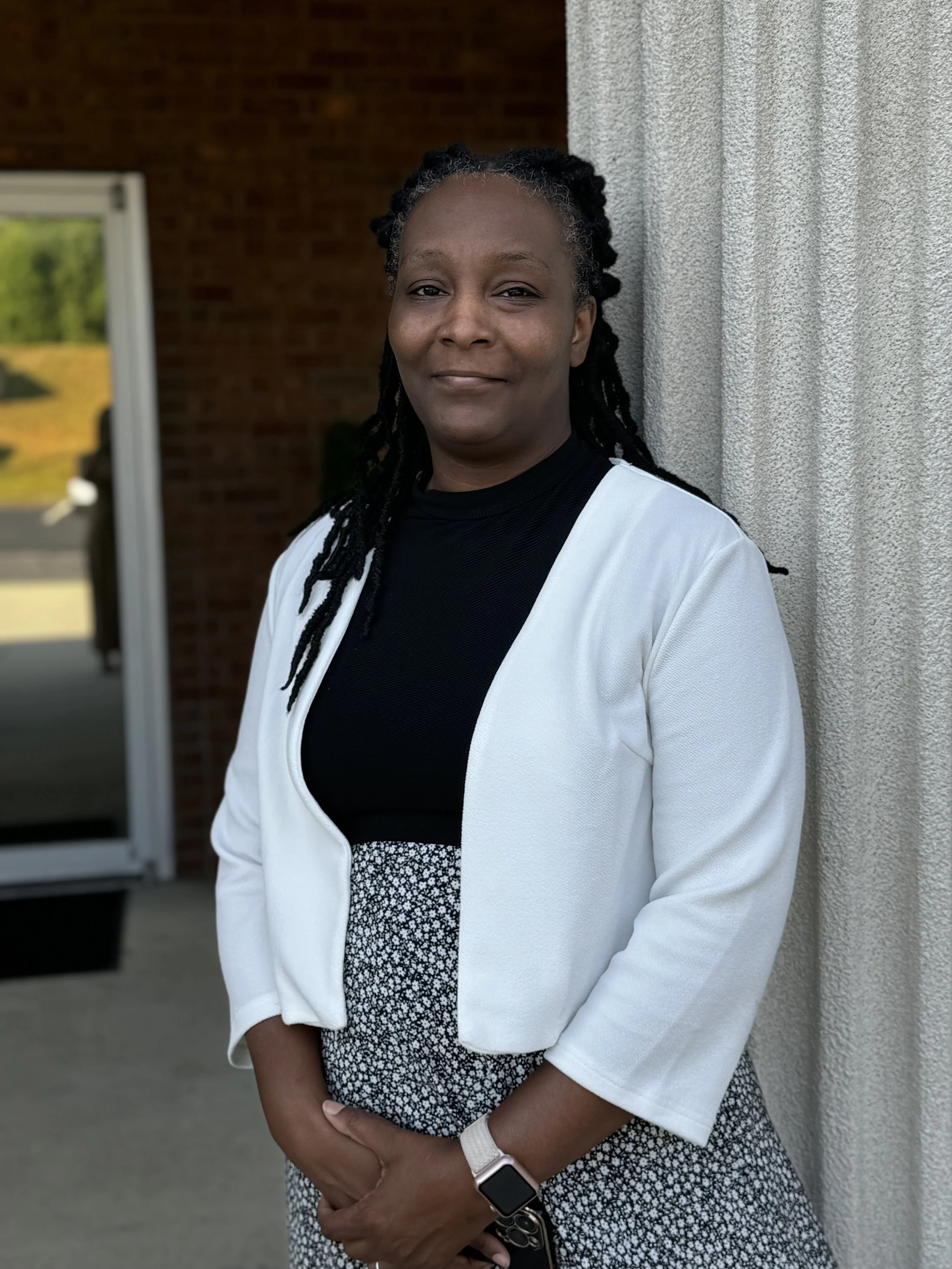
What My Smile Never Told You
Scripture:
“Casting all your care upon him; for he careth for you.” - 1 Peter 5:7 (KJV)
I learned very early how to carry bags without letting anyone know they were heavy. I don't mean the kind you carry home from the grocery store. I mean the invisible ones: the ones filled with pain, disappointment, fear, rejection, anger, and things you don't have words for when you're young.
I had pain, but you probably wouldn't have known it from looking at me. I smiled. I laughed. I learned how to appear happy even when I wasn't. I was raised with the understanding that what happened at home stayed at home. You didn't tell people your business. It wasn't their problem, and honestly, I grew up believing nobody really cared anyway. So, whatever was happening, you dealt with it. You got yourself together, walked outside, and smiled.
Looking back, I think that was one of the first bags I ever picked up: the belief that no matter what was happening inside of me, nobody on the outside needed to know.
As I got older, the bags got heavier. I became a teenage mother, and now I had children depending on me. In my mind, I didn't have time to fall apart. I had to keep going. So, I learned how to keep moving even when I was hurting. I took care of what needed to be done and pushed my feelings to the side, thinking I would deal with them later. But later rarely came, and the bags just kept getting heavier.
Relationships and life experiences added even more. I experienced abuse before I was 23, but I still knew how to smile. I knew how to walk into a room and look like everything was okay. People could see me laughing without knowing what I had cried about. They saw me living my life without knowing what I was going through behind closed doors. Hiding my pain had become normal for me.
Eventually, I found other ways to deal with what I was carrying. Alcohol and drugs became part of my life. At the time, I wasn't thinking about whether I was trying to numb my pain. I was just living the way I knew how. Looking back now, I realize I wasn't getting rid of any of my bags. I was just finding ways to make them feel a little lighter for a while.
Even my relationship with God had its ups and downs. There were times when I went to church, but I hadn't fully given my life to Him. Then I lost a baby, and that pain became another bag. Instead of running to God, I walked away. I didn't understand why it happened, and I didn't know what to do with the hurt. So, I did what I had always done.
I smiled, kept going, and carried another bag.
When I eventually surrendered my life to God, I started hearing about freedom. Give it to God. Lay your burdens down. Cast your cares on Him. I believed all of it, but I discovered that knowing Jesus could carry my burdens and actually giving them to Him were two different things.
When you've carried something for a long time, you can forget you're carrying it.
The anger becomes part of your personality. The walls become "just how I am." The inability to trust becomes wisdom. The refusal to ask for help becomes independence. The smile becomes a mask. We can become so accustomed to surviving that we don't recognize the behaviors survival produced in us.
I had learned how to survive, but God was teaching me how to live.
And living in freedom meant opening some bags.
One of those moments came through a message about forgiveness. As I listened, I knew God was dealing with me about a relationship in my life. My first instinct was to think about everything the other person had done. I had reasons for feeling the way I felt. I could explain why I was hurt, why I responded the way I did, and why I believed my feelings were justified.
But God wasn't talking to me about them.
He was dealing with me.
That was difficult because I wanted God to address what they had done. Instead, He showed me what I was carrying because of it. Hurt had become offense. Offense had become anger. Anger had become unforgiveness, and I had become comfortable carrying the bag.
I could worship carrying it. I could pray carrying it. I could encourage somebody else while carrying it. I could walk into church smiling with the bag tucked away where nobody could see it.
But God knew it was there.
Eventually, I had to make a decision. Was I going to keep explaining why I had the bag, or was I finally going to put it down?
So, I apologized.
That apology didn't mean everything that happened was okay. Forgiveness didn't erase the hurt. It meant I was taking responsibility for what God was showing me about myself. I had to stop saying, "But they..." long enough to hear God saying, "I'm talking to you."
And as I released the offense, the relationship began to be restored.
That experience taught me something about freedom: sometimes we are asking God to remove a weight that we are still gripping with both hands.
First Peter 5:7 tells us to cast all our cares upon Him because He cares for us. That means I don't have to pretend the bag isn't heavy. I don't have to hide it. I don't have to decorate it, rename it, justify it, or convince everyone that I can handle it.
I can give it to Him.
Maybe your bag doesn't look like mine. Maybe yours is rejection. Maybe it's something that happened during your childhood. Maybe it's betrayal, grief, insecurity, shame, disappointment, anger, or unforgiveness. Maybe you've carried it for so long that you no longer remember what life felt like without it.
And maybe, like me, you've gotten really good at smiling while you carry it.
God isn't asking you to pretend it didn't happen. Healing doesn't require denying your story. Forgiveness doesn't mean calling wrong things right. Freedom doesn't erase the past.
Putting down the bag simply means deciding that what happened to you doesn't get to control what happens next.
I used to think strength meant being able to carry all my bags without anyone noticing how heavy they were. God has been teaching me something different.
Sometimes strength is admitting the bag is heavy.
Sometimes strength is asking for help.
Sometimes strength is forgiving.
Sometimes strength is allowing yourself to heal.
And sometimes strength is simply opening your hand and saying, "Lord, I don't want to carry this anymore."
My hands weren't created just to carry baggage. Neither were yours.
Reflection
What bag have you become so accustomed to carrying that it feels like part of who you are?
Ask yourself: What is inside my bag? When did I pick it up? How has carrying it affected the way I treat myself, other people, and God? Am I holding onto something God has been asking me to release?
Most importantly, consider this question:
Who would you become if you finally put the bag down?
Prayer
Lord, I have carried some things for so long that I don't always recognize them as baggage anymore. You know every hurt, disappointment, fear, offense, and memory I have hidden behind my smile. Give me the courage to open the bags I have been afraid to deal with. Show me what I need to release and what You are trying to heal in me. Help me understand that releasing my pain doesn't mean it didn't matter. Teach me to give You what I was never meant to carry forever. I don't want to simply survive while holding onto my baggage. I want to walk in the freedom You have given me. Today, I open my hands and give You my bags, one at a time. In Jesus' name, amen.
Takeaway:
I can acknowledge what happened to me without allowing it to determine who I become. The bag may be part of my story, but I don't have to carry it into my future.